Why Incidents Feel Chaotic Before Anyone Touches a Keyboard
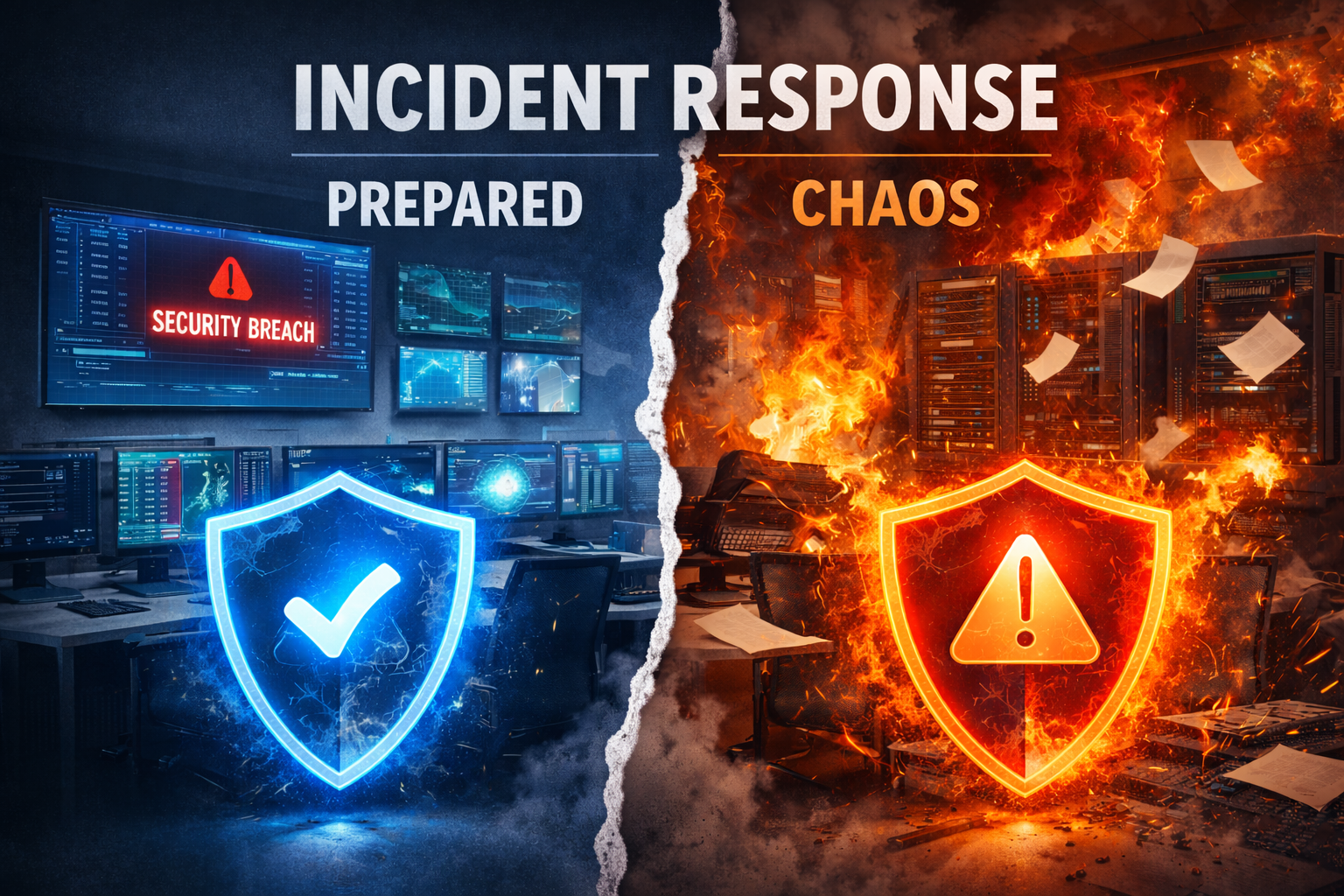
When most business owners think about a cyber incident, they picture the middle of it. Screens flashing. Systems down. IT scrambling. Phones ringing. Someone saying, “We’re working on it,” without actually explaining what it is.
That moment feels like the problem. It isn’t.
The chaos you experience during an incident usually started weeks, months, or even years earlier. Long before anyone clicked a bad link or an attacker showed up.
Most organizations assume incident response begins when something breaks. In reality, that’s just when the bill comes due.
What actually determines whether an incident is a short, painful interruption or a full-blown business crisis is what was decided ahead of time. Or more often, what wasn’t.
If no one has agreed on what qualifies as a real incident, people hesitate. If no one knows who’s allowed to make decisions, everyone waits. If leadership hasn’t already accepted that incidents will happen, denial kicks in right when speed matters most.
That hesitation is where panic comes from.
And panic is expensive.
This is why having something, any kind of documented plan, is better than having nothing. Your plan doesn’t need to be perfect. It doesn’t need to be long. It doesn’t even need to be technical.
A perfectly valid starting point is simply answering questions like:
- What counts as an incident for our business?
- Who gets called first?
- Who is allowed to make decisions?
- When do we bring in outside help?
If your entire plan boils down to “call our IT provider and let them take the lead,” that’s not a failure. That’s clarity. And clarity beats improvisation every time.
Where businesses get into trouble is waiting for the “right time” to formalize this. Or assuming their IT provider will just handle it. Or believing that having cyber insurance somehow replaces planning.
It doesn’t.
Insurance doesn’t stop downtime. Tools don’t make decisions. And during an incident, leadership indecision can do more damage than the attacker.
The goal of planning isn’t to predict every possible scenario. It’s to remove uncertainty when stress is high. When people already know who’s in charge, what matters most, and what the priorities are, incidents feel controlled instead of chaotic.
And that’s the difference between disruption and disaster.
In Part Two, we’ll talk about what happens after the incident. This is where most businesses miss their biggest opportunity to reduce risk, cost, and chaos the next time around.