The Most Valuable Part of an Incident Happens After It’s Over
Once systems are back online, most organizations want to move on as fast as possible.
The emails stop. Customers calm down. You can breathe again. The temptation is to close the book and get back to “normal.”
That instinct is understandable. It’s also how the same incident happens again.
What separates resilient businesses from fragile ones isn’t whether they avoid incidents. It’s whether they actually learn from them.
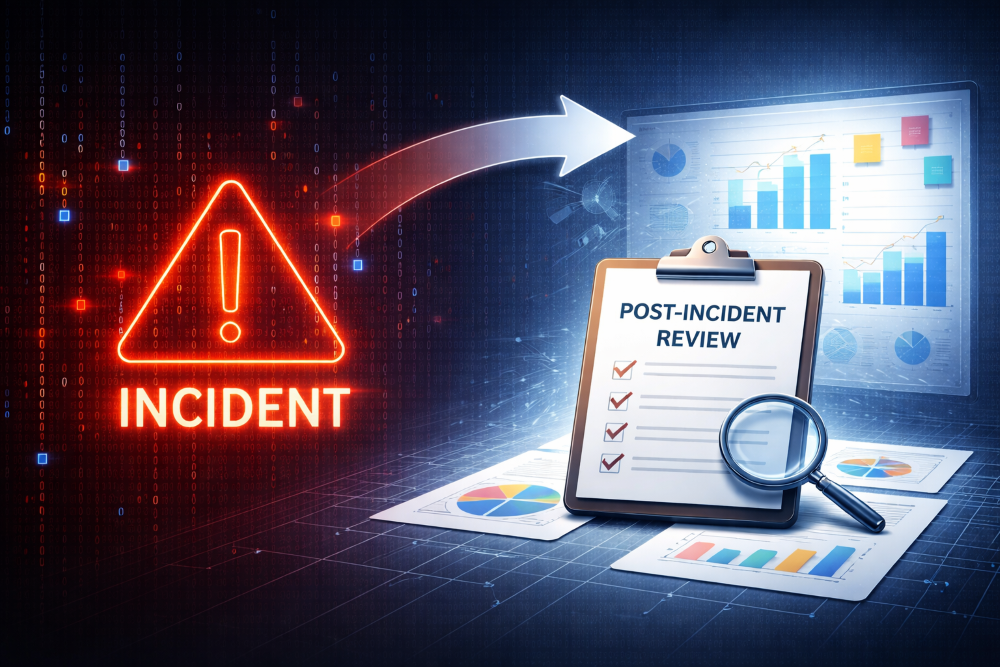
This is where post-incident reviews come in. Not the performative kind. The real kind.
A useful post-incident review isn’t about assigning blame or proving that people worked hard. It’s about answering uncomfortable but critical questions:
- Where did things slow down?
- What decisions took longer than they should have?
- What information did leadership wish they had sooner?
- What assumptions turned out to be wrong?
If the answer to every question is “everything went fine,” then nothing meaningful was examined.
Good reviews focus less on what went well and more on where friction showed up. Confusion. Delays. Mixed messaging. Unclear authority. Those aren’t personal failures. They’re planning gaps.
And if you don’t experience real incidents often (which is good!), this is exactly why tabletop exercises matter. They let you test decisions, communication, and leadership response without real risk on the line.
Tabletop exercises are where businesses can safely discover:
- Who freezes when pressure hits
- Where decision-making gets stuck
- Which assumptions don’t hold up
That learning is far cheaper in a conference room than during a real outage.
The most important part is what happens after the review. If nothing changes— no updates to who decides, how fast escalation happens, or what leadership expects— then the exercise was just theater.
This is why planning and post-incident review are more important than the technical middle of an incident.
Technology helps contain damage. Planning and learning determine whether damage repeats.
When businesses invest time in deciding how they’ll respond and how they’ll improve, incidents stop feeling like chaos and start feeling like managed events.
And that’s the real goal.
Because panic isn’t a phase of incident response.
It’s a symptom of decisions that were never made.